Wingham · Ash · Littlebourne · Wickhambreaux · CT3
Hedge cutting in Wingham and hedge reduction, plus pruning, crown thinning, crown raising, crown reduction and deadwooding on the mature village-orchard trees behind the hedge. For Wingham and the villages along the A257 between Canterbury and Sandwich. Fully insured. We plan around the bird-nesting window (1 March to 31 August). Six-week conservation-area notice to Dover District Council handled for you.
What we do
Two hedge services and five tree services, all under one roof. Specified for the chalk and Thanet Sand around Wingham, the wide-street conservation-area rules that cover the historic High Street core, and the hawthorn-heavy field boundaries beyond the village edge.
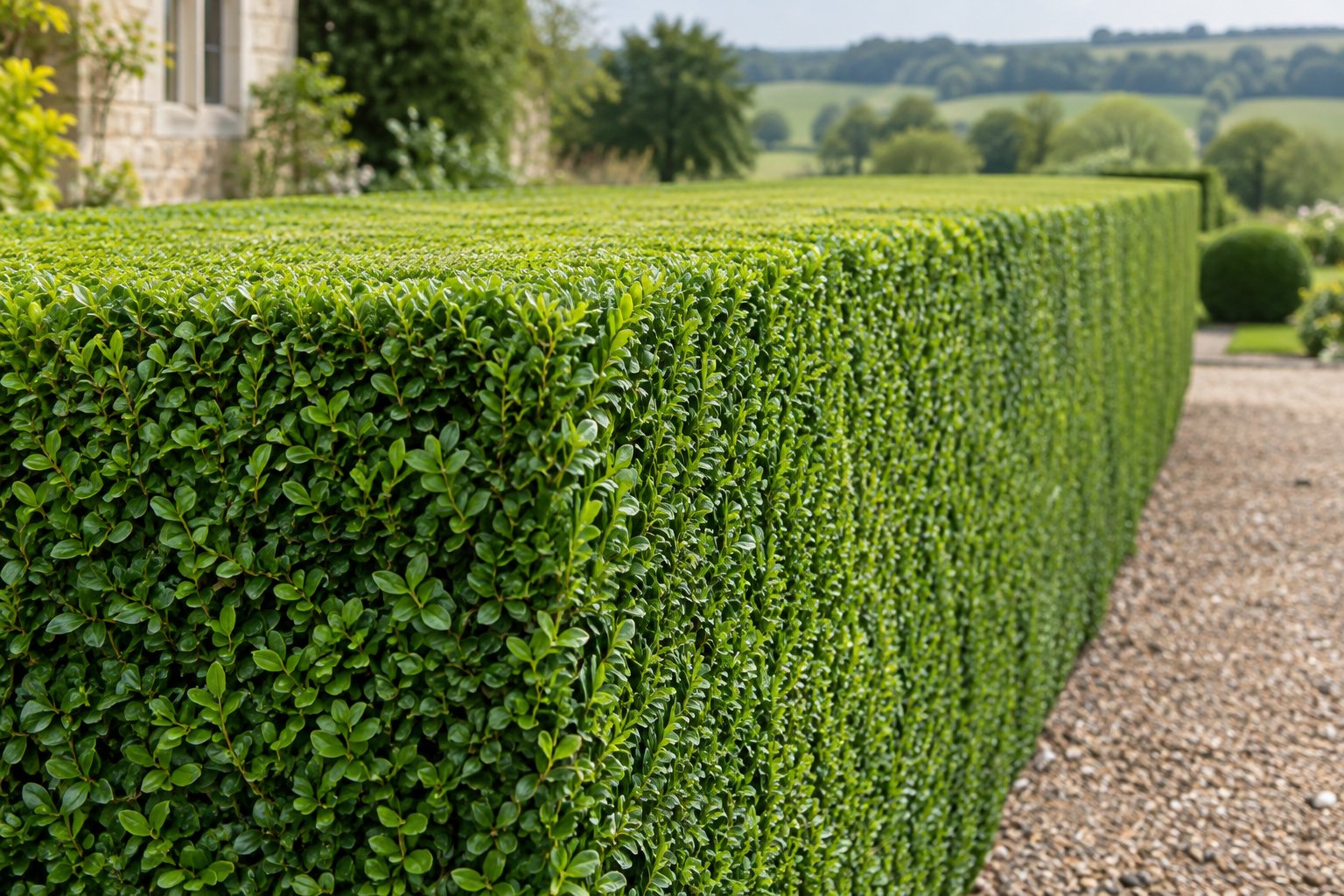
Annual or twice-yearly cuts on privet, yew, hornbeam, beech, holly and laurel. Clean lines, all arisings cleared, no power tools after 6pm out of respect for neighbours.
See pricing & timing
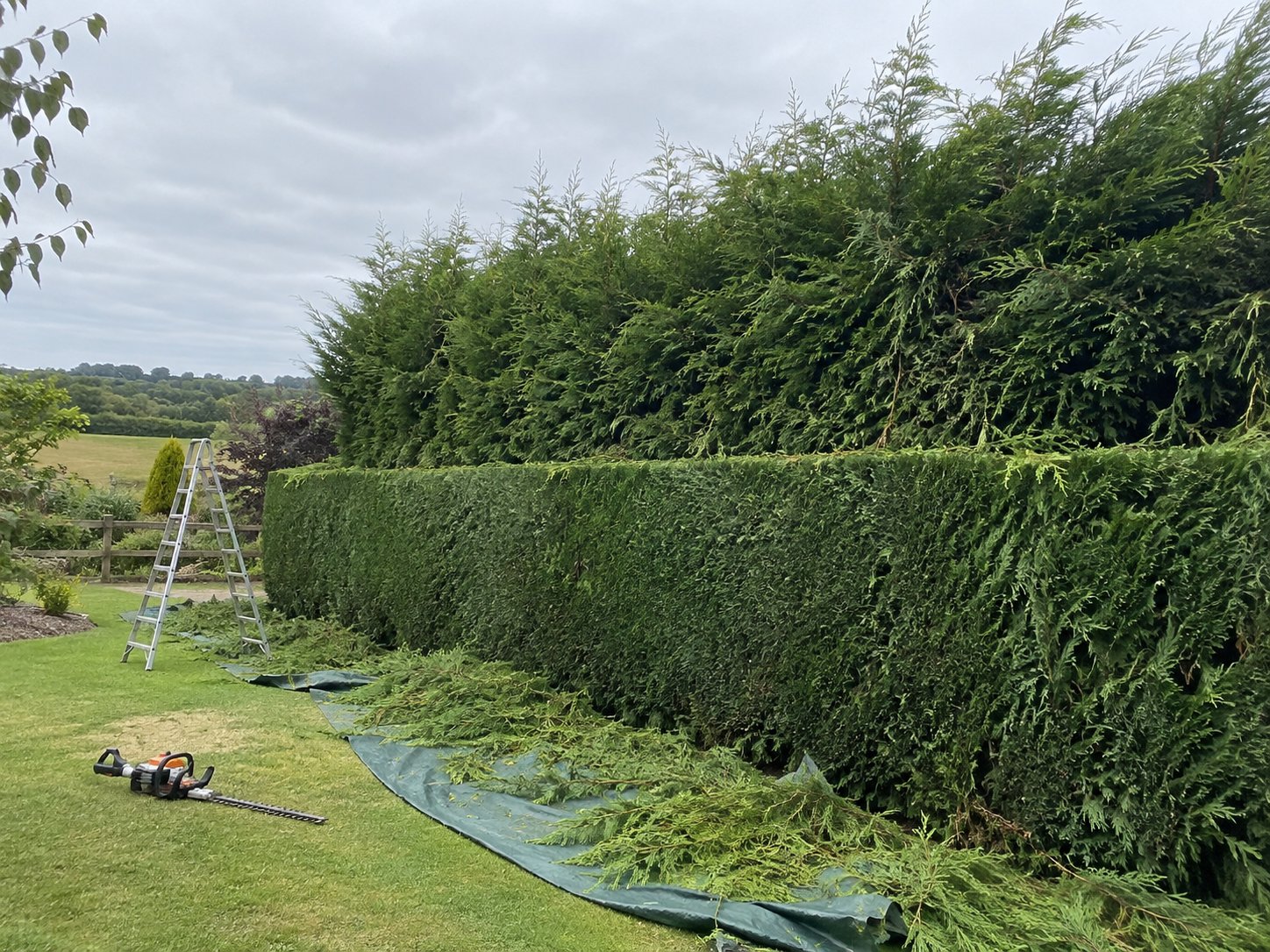
Bringing overgrown hedges back into proportion, including the post-war leylandii screens you find along the newer village edges. Staged over two or three winters where the species needs it.
How we reduce safely
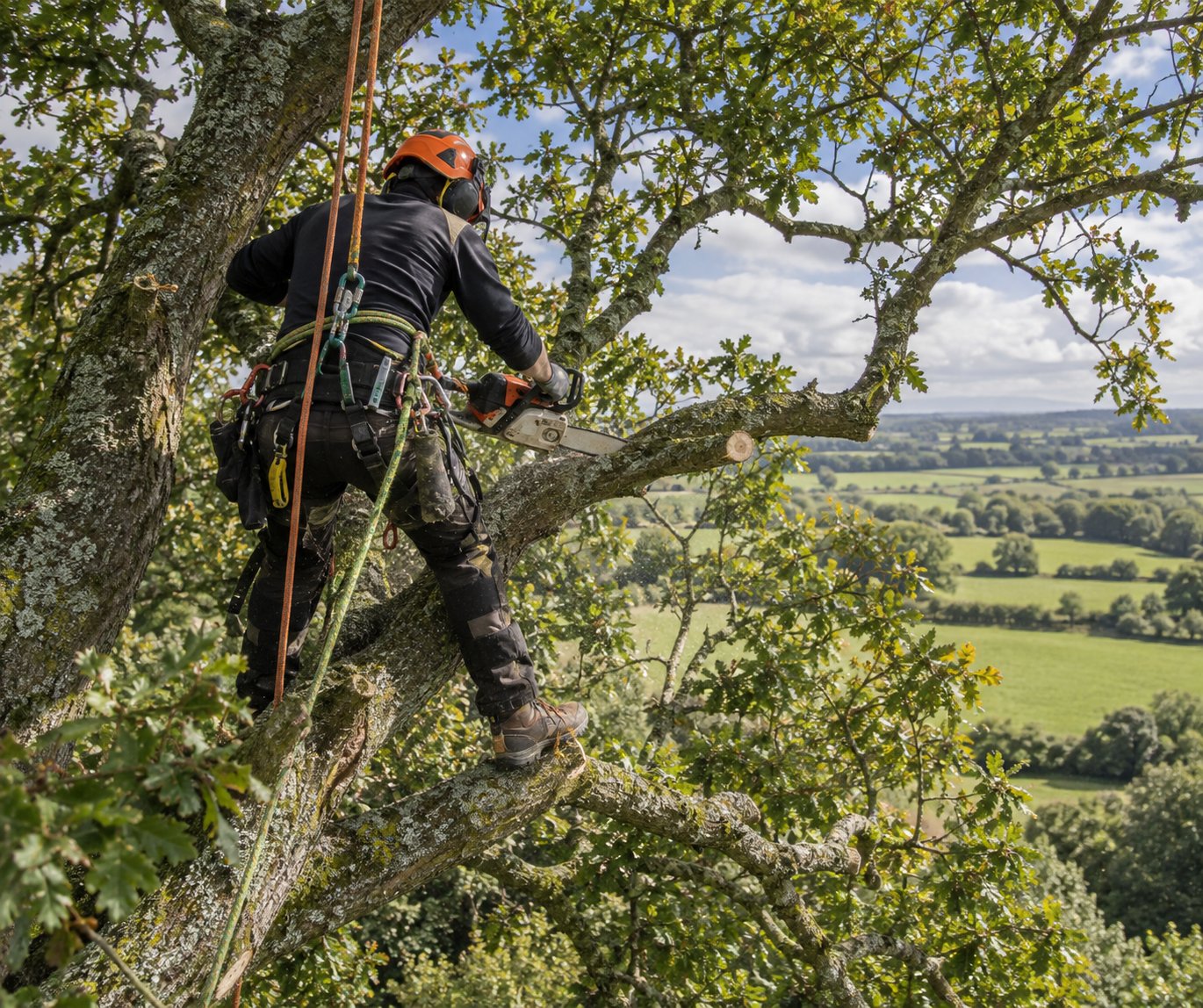
Pruning, crown thinning, crown raising, crown reduction and deadwooding: all five standard operations on the mature village-orchard limes, sycamores, ash and fruit trees behind the hedge. TPO and conservation-area notice to Dover District Council handled for you.
See tree workOur promise
We don't ask for payment until you have walked the hedge with us and you are happy. If we haven't done what we said we would, we put it right or you owe us nothing. No deposits, no upfront, no chasing.
Anyone on a state pension, automatically. No card, no proof of anything. Just mention it when you book. Honour system; we trust people.
Used us before? Your next job over £500 gets 10% off, no time limit, no need to remind us. It is logged when we send the quote.
Why local matters
The village sits on the eastern edge of the East Kent chalk outcrop, where the Thanet Sand cover begins. That means two soils inside one parish: shallow, sharply alkaline chalk running west toward Littlebourne and Adisham; lighter, freer-draining Thanet Sand thickening east toward Ash. A species that thrives on one side sulks on the other.
East Kent is also one of the driest corners of the country. Around 725 to 750 millimetres of rain a year, most of it not falling in the growing season. That changes what survives a first summer as a bare-root plant, and it changes how a mature hedge behaves in a July drought. We work to that variation, not against it.
In the Wingham Conservation Area?
Wingham has a designated conservation area covering the historic High Street core. If a tree or hedge has any stem over 75mm at 1.5 metres, Dover District Council needs six weeks' written notice before work starts. We file the section 211 notice on your behalf, included in every quote.
Recent work
A running log of jobs around Wingham and the surrounding villages. Updated as we finish them.
Common questions
It is an offence under section 1 of the Wildlife and Countryside Act 1981 to damage an active wild bird nest. The main nesting season runs 1 March to 31 August. Heavy work defaults to September through February. Cutting inside the window is possible only after a competent visual nest check confirms no active nests. We plan around that window as standard.
Most routine cuts around Wingham fall between £120 and £400 depending on length, height, species and access. Larger reductions on overgrown leylandii range from £300 to £900. We quote a fixed price after seeing photos and the postcode.
Routine cutting of hedging species is exempt. But if any stem in a tree or hedge is over 75mm in diameter measured at 1.5 metres, work in a conservation area needs six weeks' written notice to Dover District Council before starting. Wingham has a designated conservation area covering the historic High Street core. We file the notice on your behalf, included in every quote.
Leylandii, thuja and other cypress species do not regrow from bare wood. Once you cut past the green needle-bearing zone, that face stays brown, so hard reductions should usually be staged over two or three winters.
You have the common-law right to cut branches and roots that cross your boundary, back to the boundary line. The cut material legally belongs to your neighbour, so offering it back is best practice. Conservation-area, TPO and High Hedges Act rules apply on top.
Send a couple of photos and a postcode. We come back same-day with a fixed price and the next available date.